
Upload the invoice and the app reads it: supplier, number, line items and total. You review and save.
Supplier purchasing gets tracked in a spreadsheet per supplier, and the real work isn't typing it in: it's making it reconcile. That what was paid matches what was invoiced, that the advance gets applied, that the same invoice doesn't get paid twice. InvoPlace reads the XML or the PDF so entry happens on its own, and gives its main screen to the only thing that matters: what doesn't reconcile, ranked by money at risk.
Real screenshots, not mockups. Tap any of them to see it full size; arrows move between them, Esc closes.
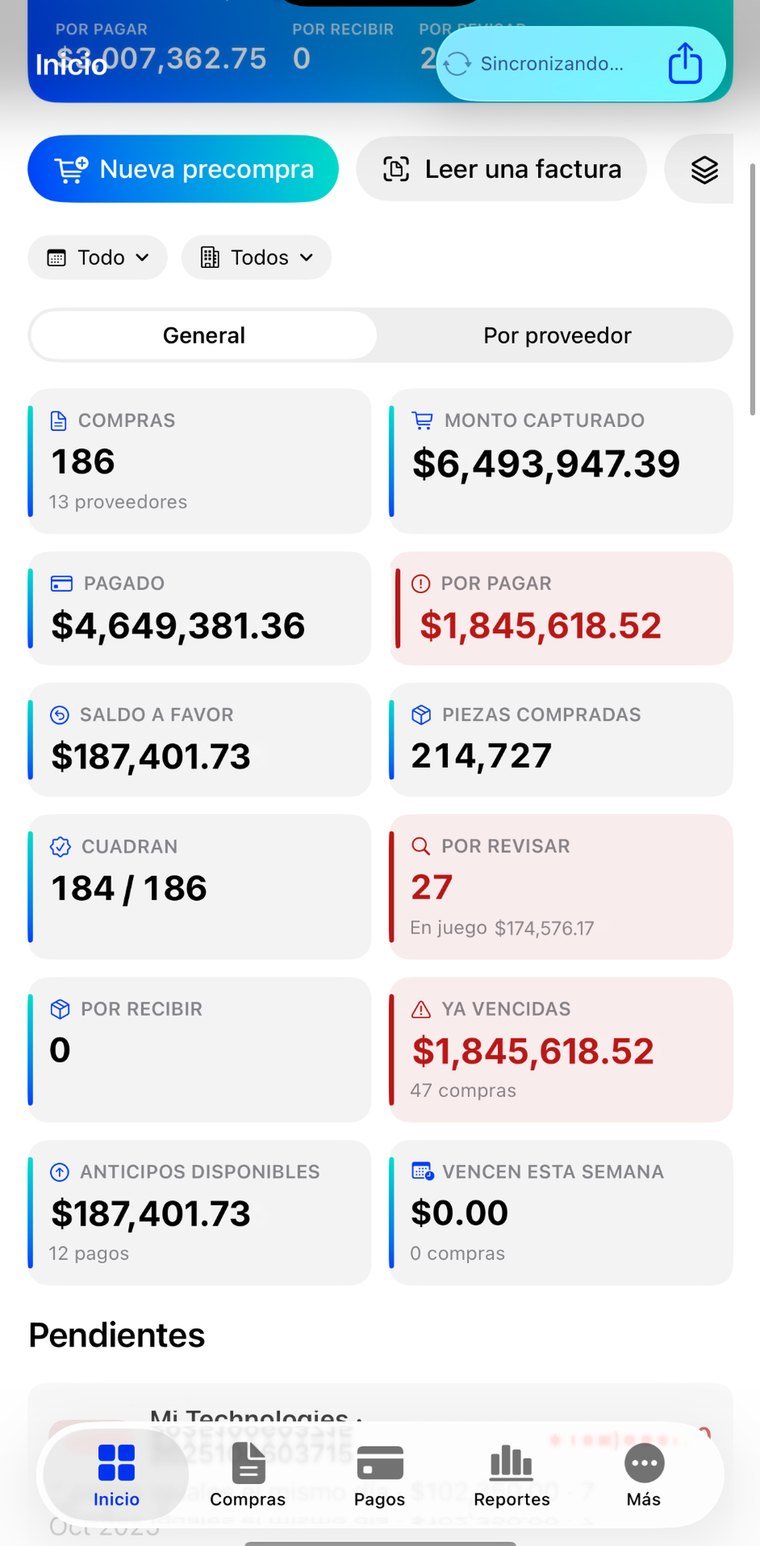
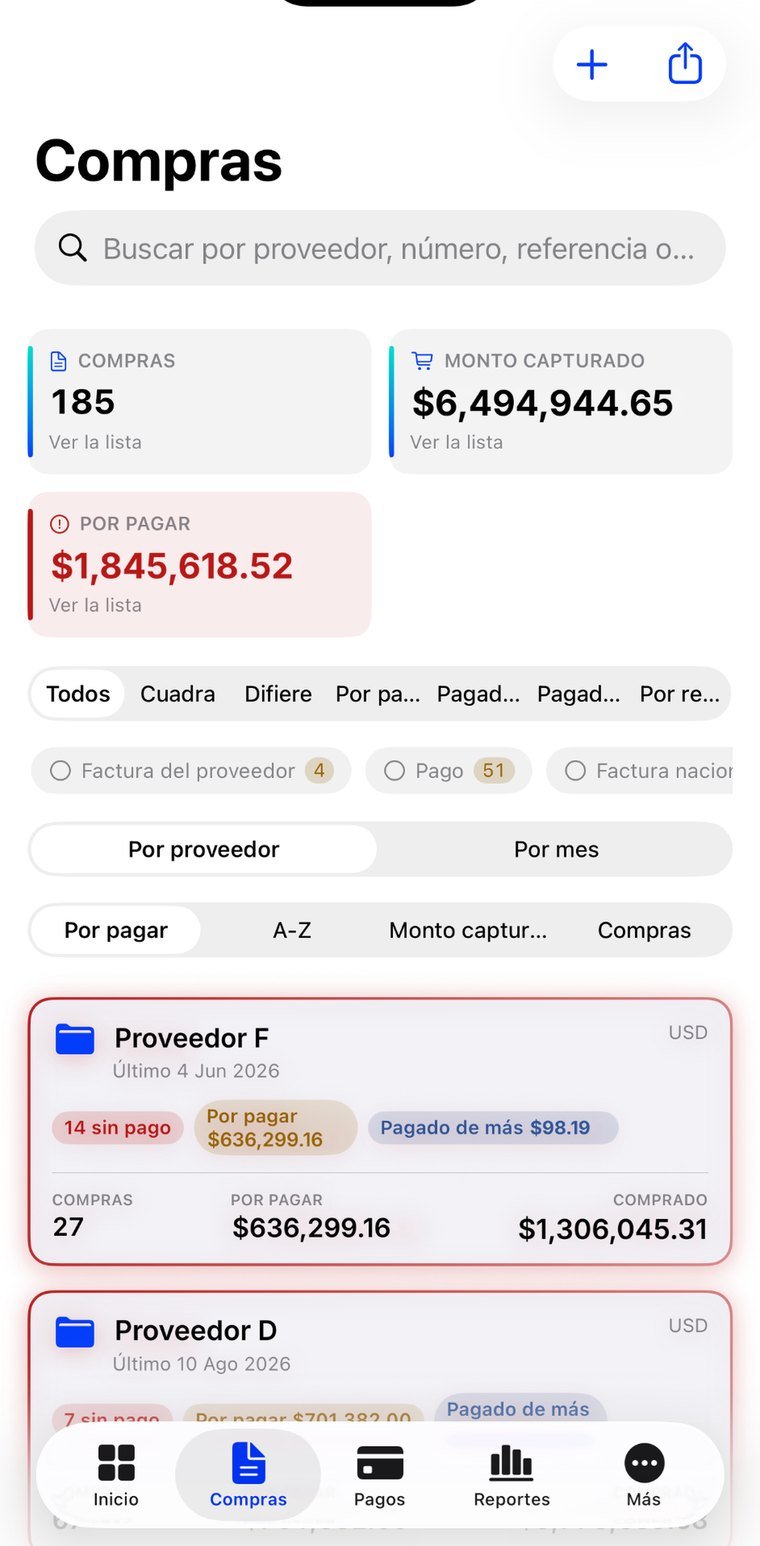
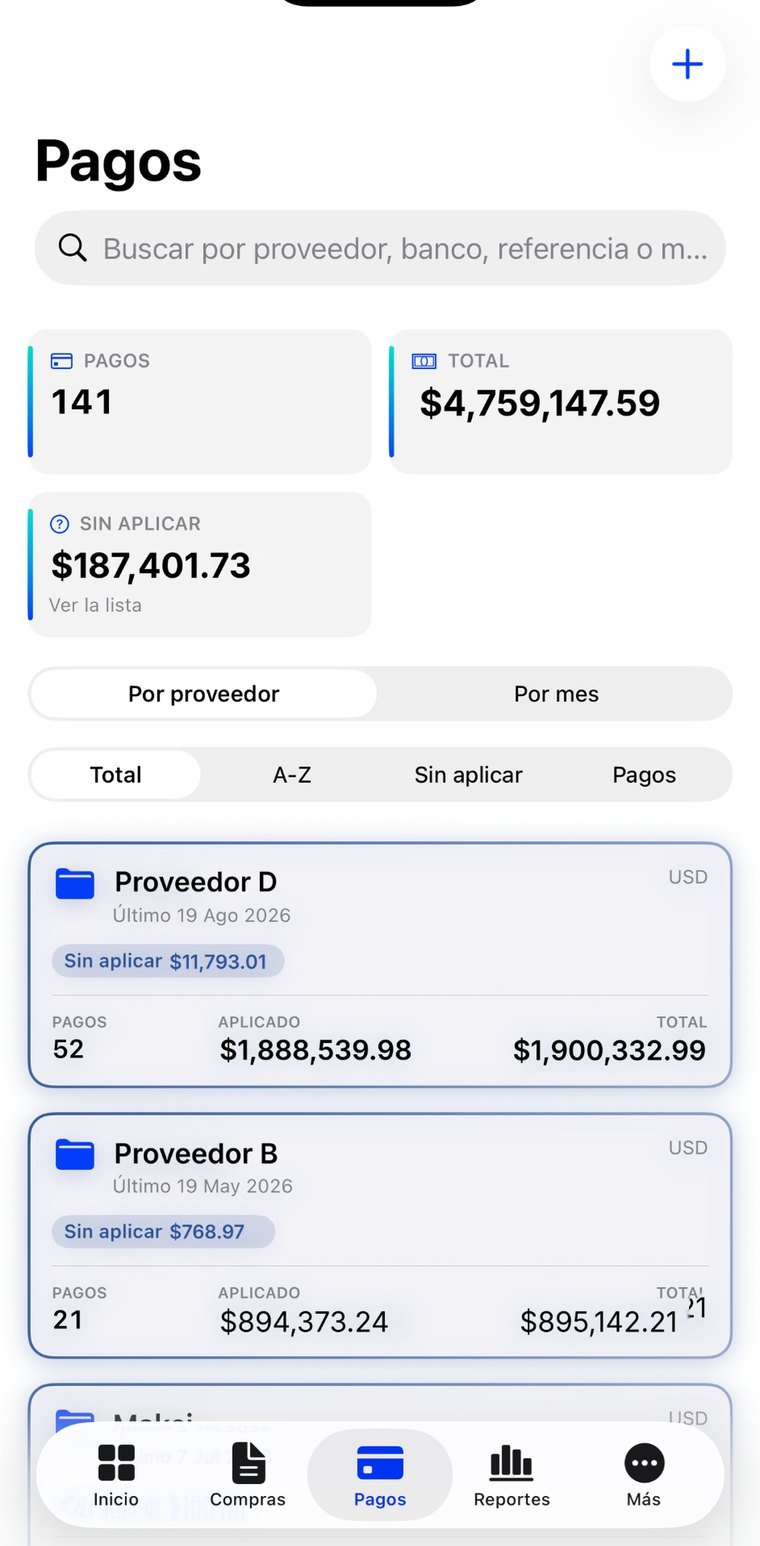
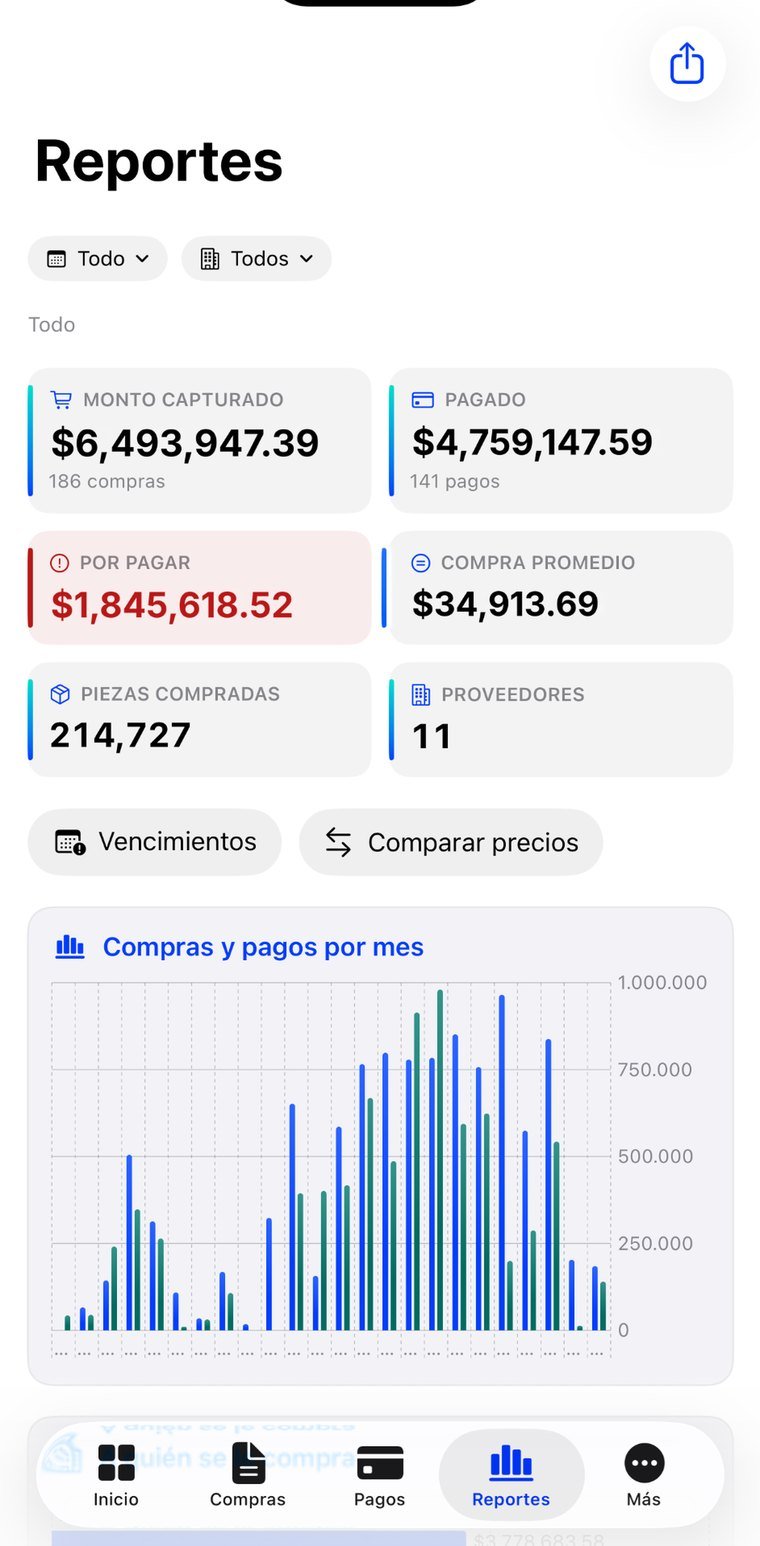
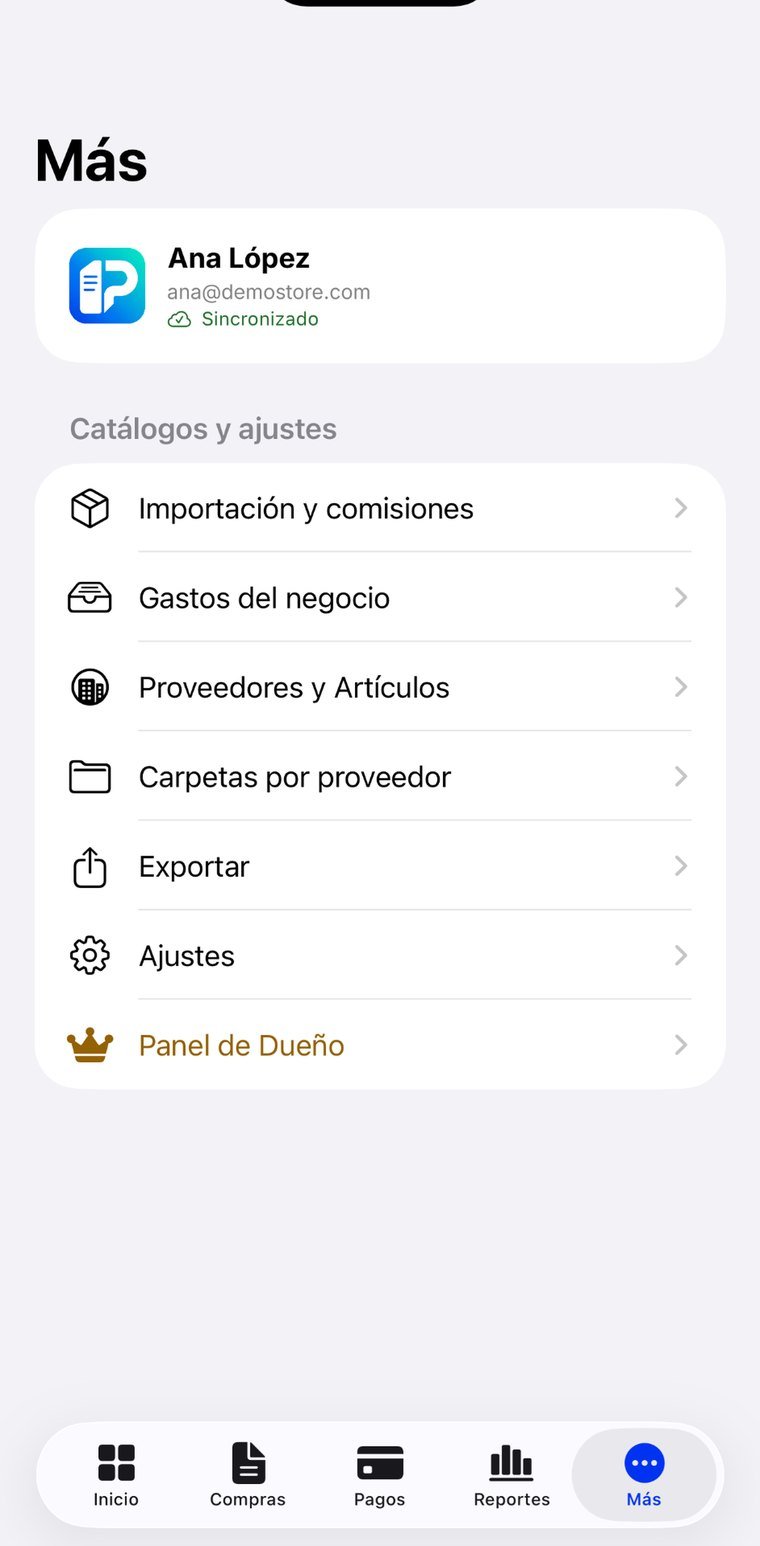
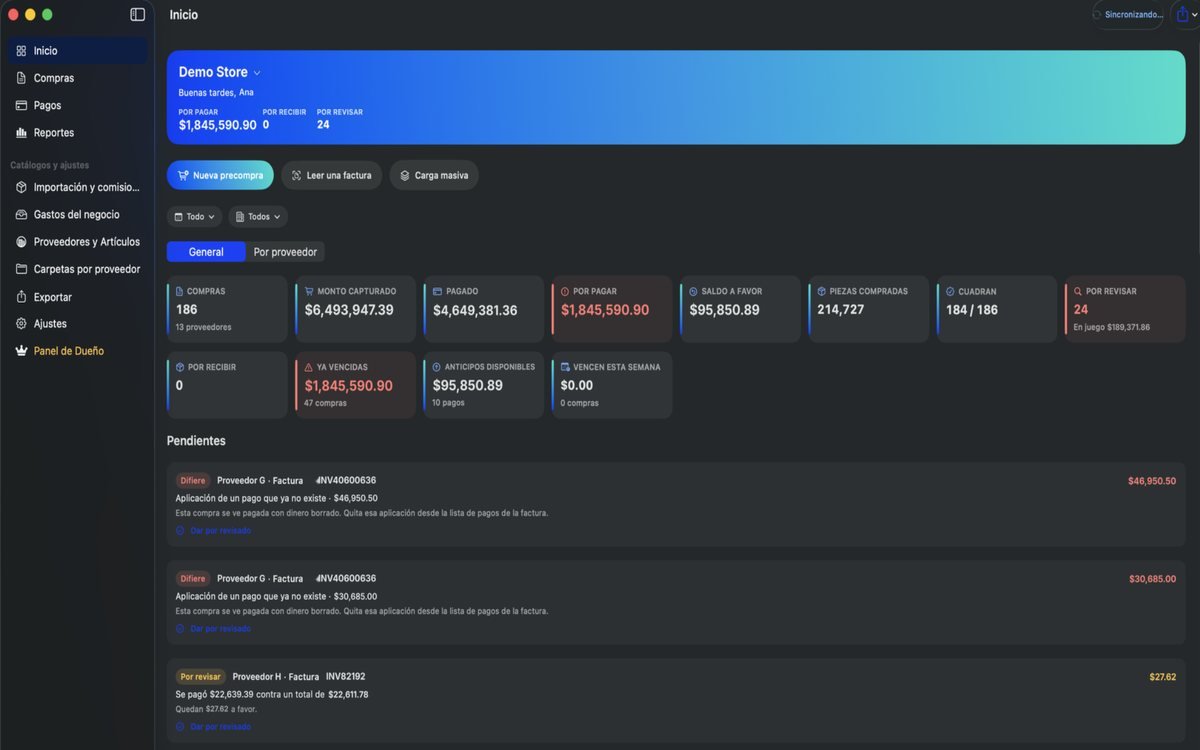
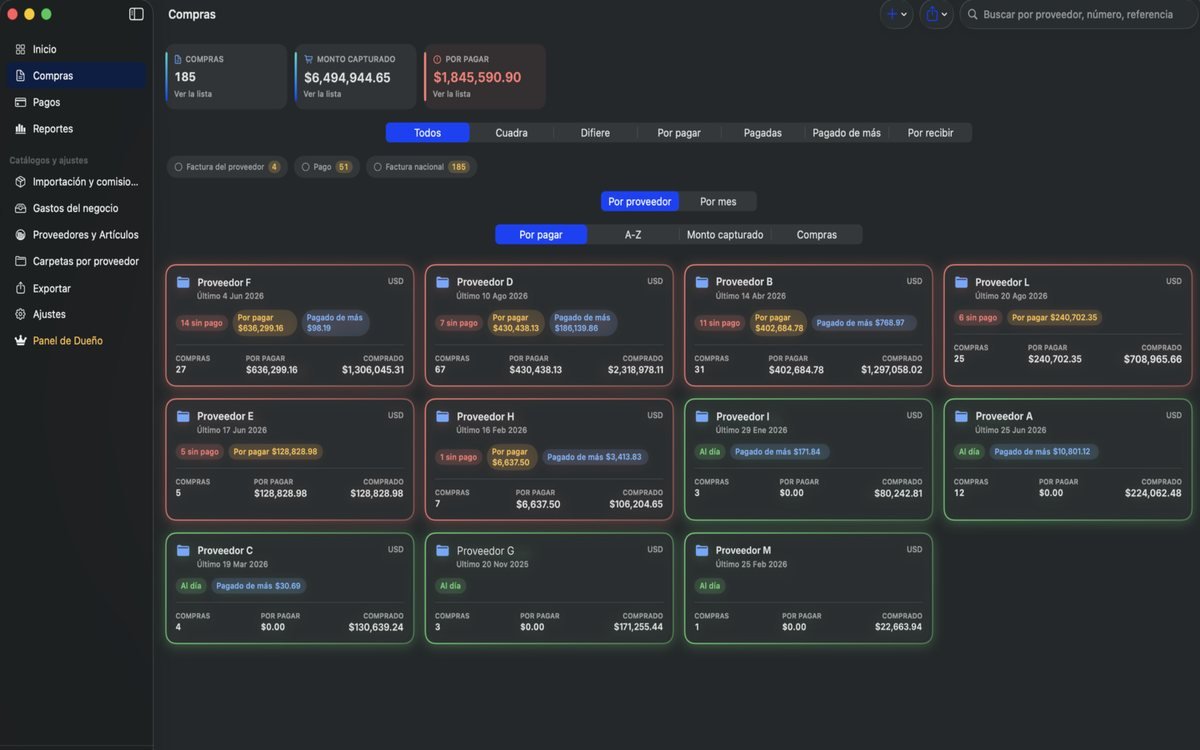
It isn't the iPhone version stretched: on the Mac the layout changes to use the width, with the sidebar always in view and cards across several columns.
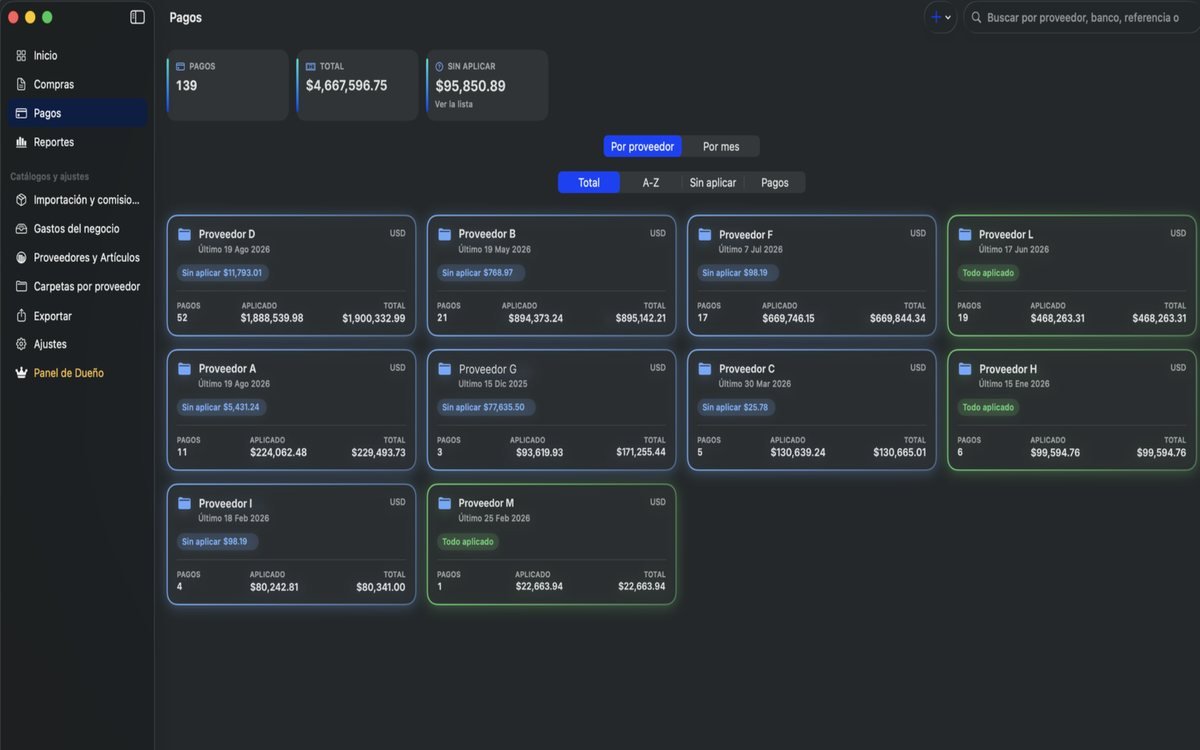
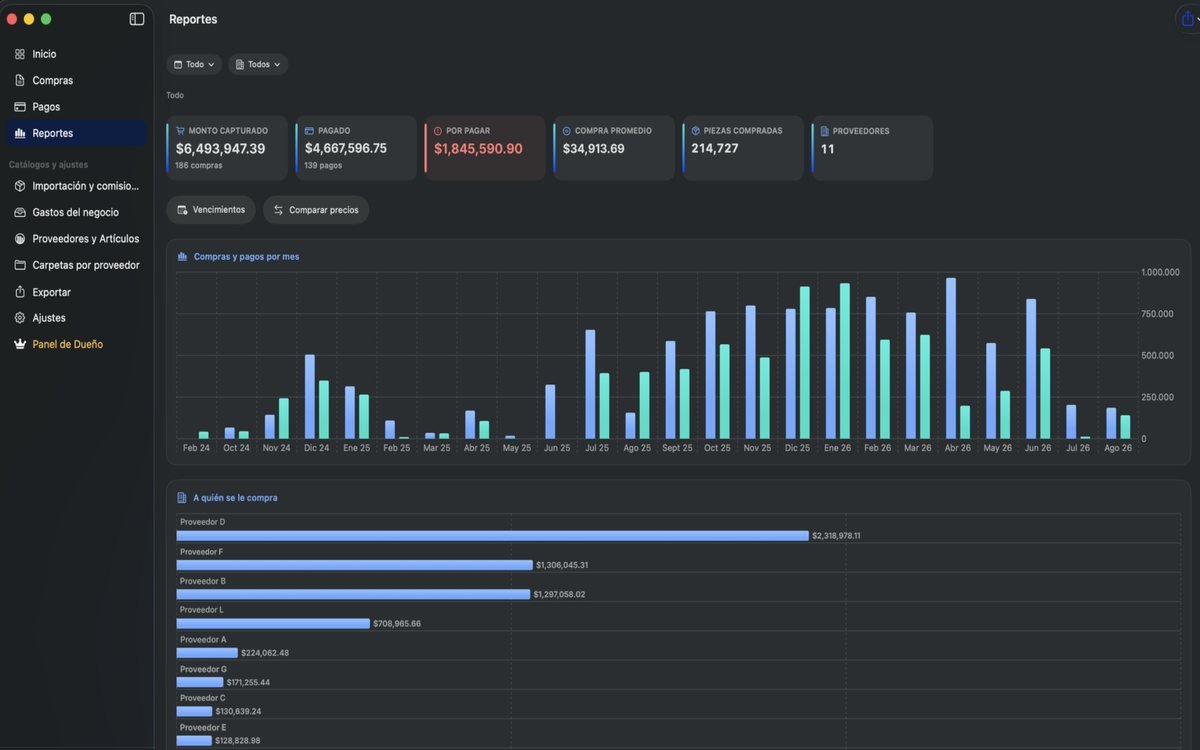
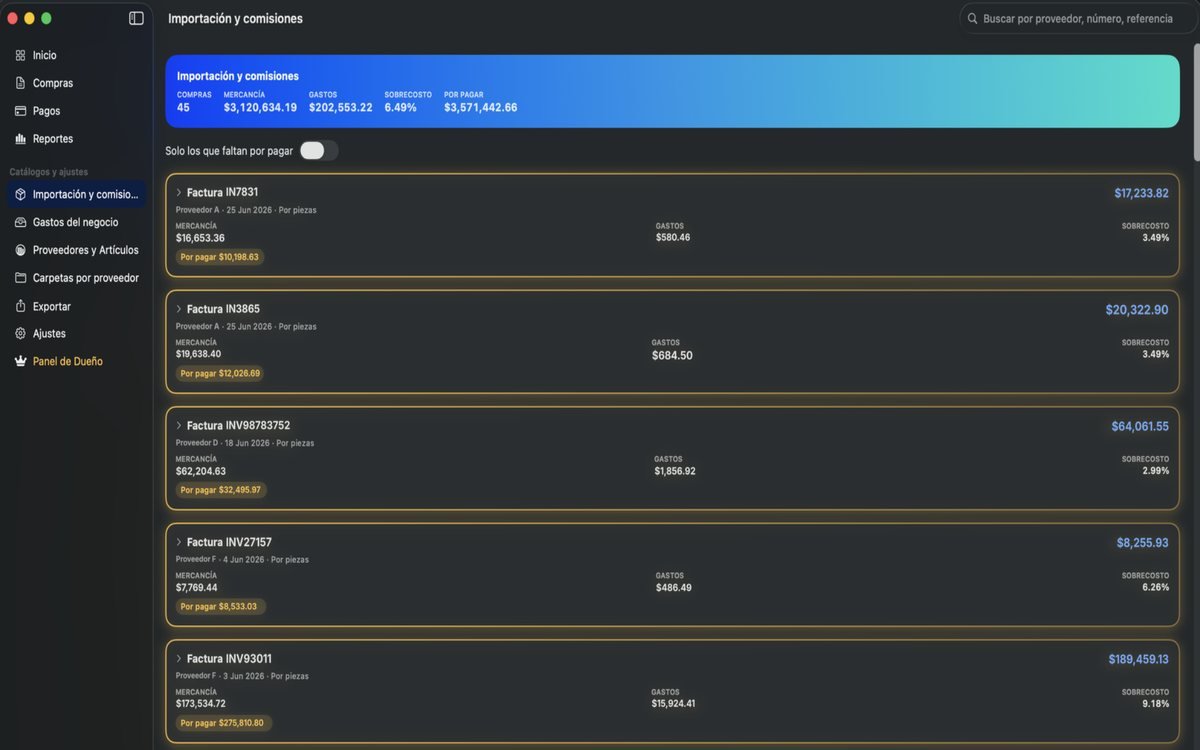
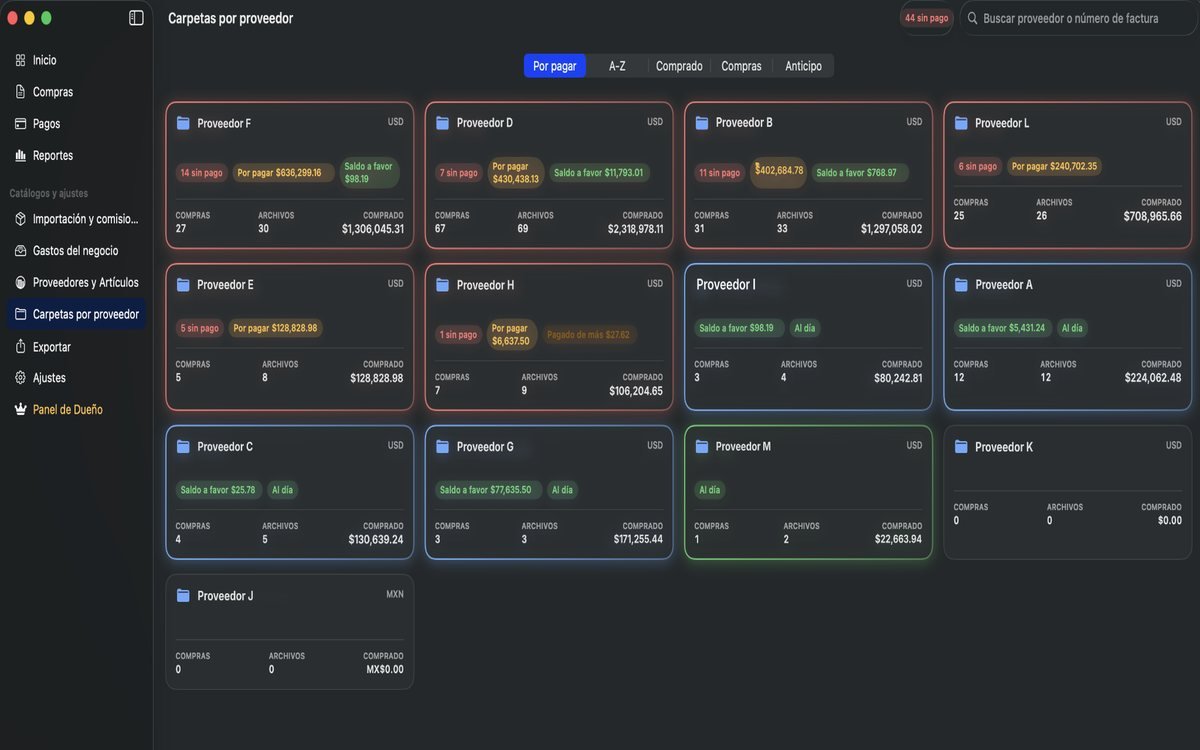
Upload the Mexican e-invoice XML and nothing is guessed: the tax authority's file carries the number, date, currency, exchange rate and every line item with its code, quantity, unit value and amount. If all you have is the PDF or a photo, it reads that too and lets you review before saving. Works with CFDI 3.3 and 4.0.
The home screen isn't a pretty summary: it's the list of what's wrong, ranked by money at risk, and every row leads straight to the purchase that needs fixing. Invoices with no payment, payments not applied, overpaid, still to be received.
A payment is tied to the invoice it covers, including partial payments, with advances drawn down and credit notes. That way the balance per supplier is real and not a subtraction done by hand.
Each supplier with its summary, inside it each invoice with its status, and opening it shows its line items, its payments and its files, with preview inside the app. It's the spreadsheet, except it doesn't stop reconciling.
What each item has been bought at, which code a new model should get, and which product it is when the supplier only sends a code. Comparing prices across suppliers stops being a manual exercise.
Import invoices with fees and the real cost delivered to the warehouse, not the one on the foreign supplier's invoice.
Statement by supplier, general summary and price comparison, as letter-size PDFs ready to print or send. It also exports to Excel.
Each company with its own suppliers and members, with roles to define who enters, who approves and who only reads.
The app opens and shows something useful even without internet: it reads from what's stored on the device first and catches up with the server afterwards.
No new account, nothing to install: you sign in with the same email and password as the app and see your information on a big screen. Useful for reviewing, showing someone something, or printing without passing screenshots around.
The email and password you already use. If you don't remember it, the reset email goes out from that same screen.
My companies, invoices, line items, payments…
The session lives only in that tab and is erased when you close it. If you signed in on a borrowed computer, nothing is left behind.
The web is for reading; entry happens in the app. Two places writing at once is how information stops reconciling and changes get lost — we'd rather that simply couldn't happen.
Permissions are enforced server-side, not by the page. From the browser you can't reach information that isn't yours, even if someone tries by hand.
The web is read-only: entry happens in the app.
For whoever pays suppliers and answers for those numbers: administration, purchasing and controllership at businesses with several companies and many suppliers.